Tokyo University of Agriculture and Technology Tanaka & Kataoka Lab.
Genetic Testing of Pathogens and Cancer Markers
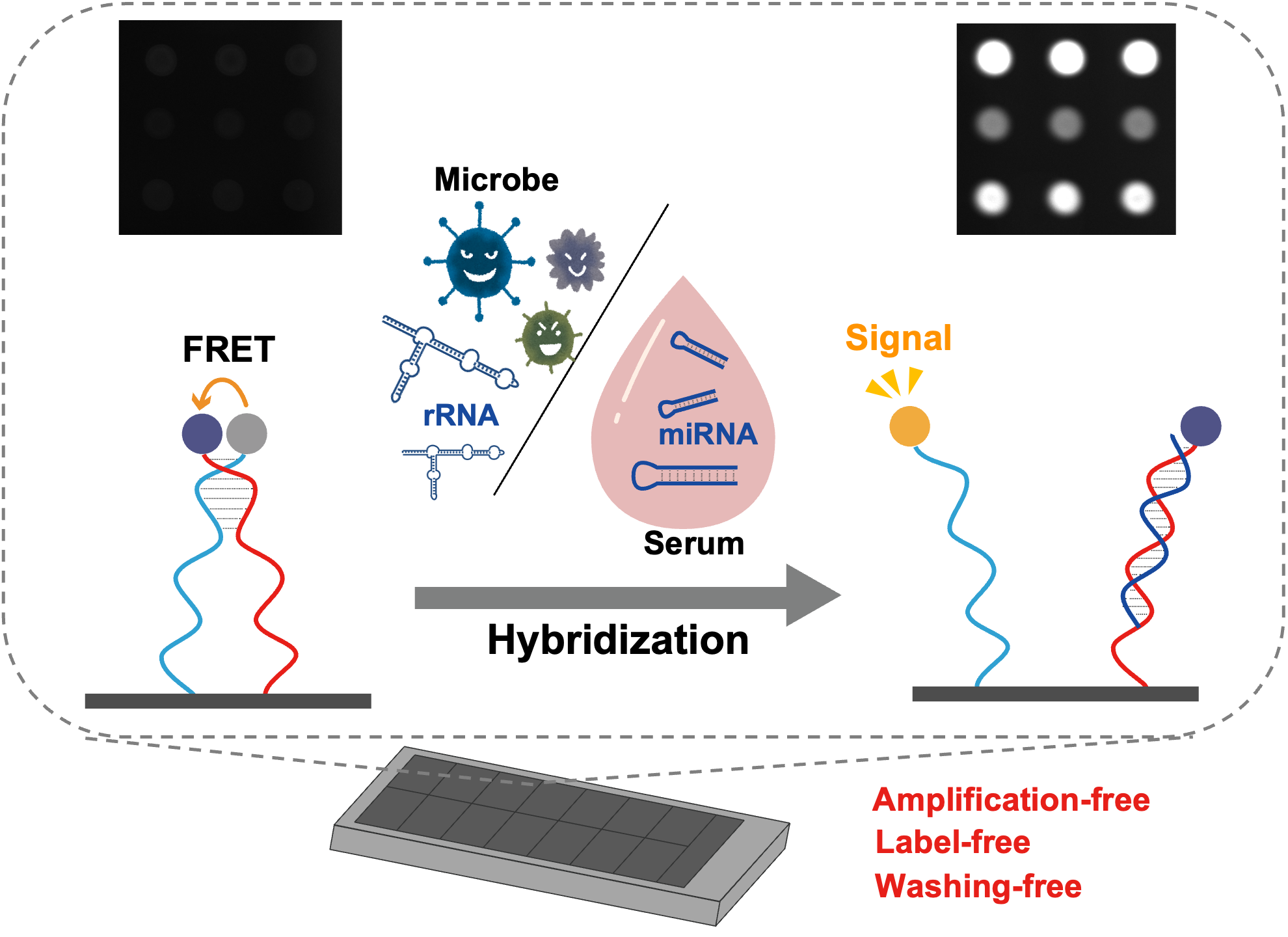
Pathogenic microorganisms, such as Escherichia coli and Staphylococcus aureus, must not contaminate food products, making microbiological testing crucial during the manufacturing process. Conventional methods are labor-intensive and time-consuming because they require culturing microorganisms for detection and identification. We have developed “signaling probe-based DNA microarrays”—a technology that utilizes DNA microarrays to detect gene sequences specific to pathogens. This system eliminates the need for gene amplification, fluorescent labeling, or washing steps required by conventional DNA microarrays, allowing simple, rapid and high-throughput testing (Figure 4).
MicroRNAs (miRNAs) are non-coding RNAs that regulate gene expression by binding to mRNAs. miRNAs are known to be abnormally expressed in cancer cells and released into the bloodstream. Consequently, early cancer diagnosis is possible by detecting miRNAs in the blood. Such liquid biopsy techniques have gained significant attention in recent years because they place a relatively low burden on cancer patients. Our laboratory is also developing early cancer diagnosis technology using the DNA microarray system described above. By designing DNA probes that are complementary to the target miRNA sequences and creating high-density arrays, it becomes possible to detect and analyze a wide variety of miRNAs in a single test.