Tokyo University of Agriculture and Technology Yoshino Lab.
Development of Cancer Organoid Technology
What is cancer organoid
Cancer tissue consists of a small population of cancer stem cells, which have self-renewal and differentiation abilities, along with differentiated cells derived from them. Cancer stem cells are key factors in cancer metastasis, recurrence, and resistance to treatments like chemotherapy, making them a crucial target for cancer therapy. However, traditional cell line models struggle to maintain cancer stem cells and fail to accurately replicate in vivo cancer tissue.
Cancer organoids have emerged as a promising model to overcome these challenges. These three-dimensional structures, derived from cancer cells, preserve the phenotype and genotype of patient-derived tissues while growing ex vivo. This makes organoids ideal for the rapid and precise evaluation of treatments, offering great potential for personalized medicine.
Cancer organoid analysis technology
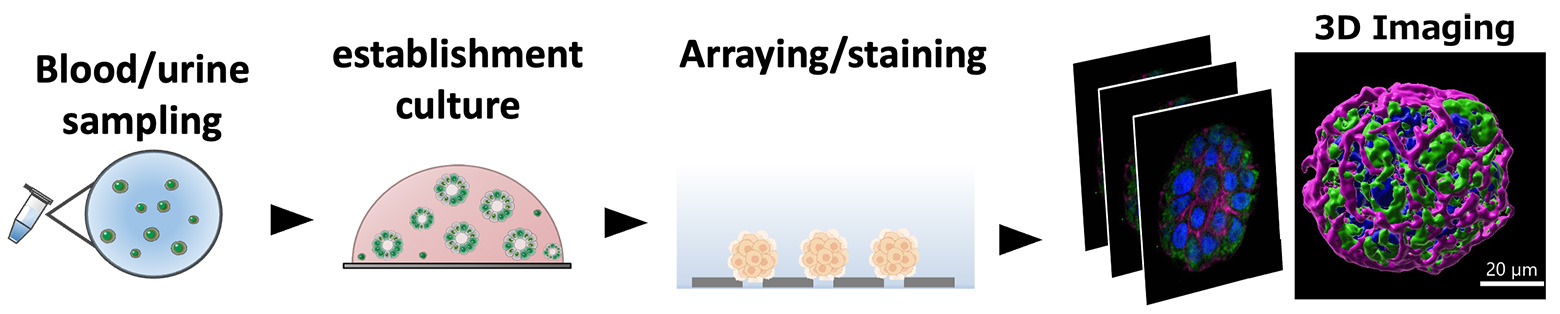
In our laboratory, we have successfully used a 3D imaging microscope to evaluate cells arrayed by the MCA at the single-cell level. We are now applying this technology to cancer organoids and developing a method for evaluating anticancer drugs at the single-organoid level.
Additionally, we are creating a platform that uses the MCA method to concentrate cancer cells from trace amounts in blood and urine, followed by culturing in the extracellular matrix. This technology aims to establish cancer organoids from liquid samples for drug evaluation. If successful, this approach will enable rapid and accurate treatment selection ex vivo, advancing personalized medicine.