Reading the battlebetween self and non-selfthrough RNA
We study piRNAs—small RNAs that animals evolved to silence transposons—as a molecular memory that is rewritten as “non-self” changes. We generate hypotheses with bioinformatics and test them with biochemistry and genetics.
Research themes
Responding to changing transposons
- Self-organization and “fluctuation” of piRNAsTransposons mutate to escape silencing. piRNA sequence patterns are not fixed but fluctuate, and we think this lets piRNAs re-target transposons from new positions—a fast response to that change.
- How piRNA clusters formDefense against newly arising transposons is written as memory into piRNA clusters, the genomic regions that supply piRNAs, and keeps being updated. We look for the rules of this slow, evolutionary-scale renewal.
Non-self beyond transposons
- piRNAs and intracellular symbiontsHow does germline RNA control deal with symbionts such as Wolbachia that pass from mother to offspring? We explore the line between partners to remove and partners to carry on.
- piRNAs and virusesCan piRNAs also fight viruses that come from outside? Using lepidopteran insects and their viruses, we study how piRNAs act against viruses and how this ability evolved.
Recent paper
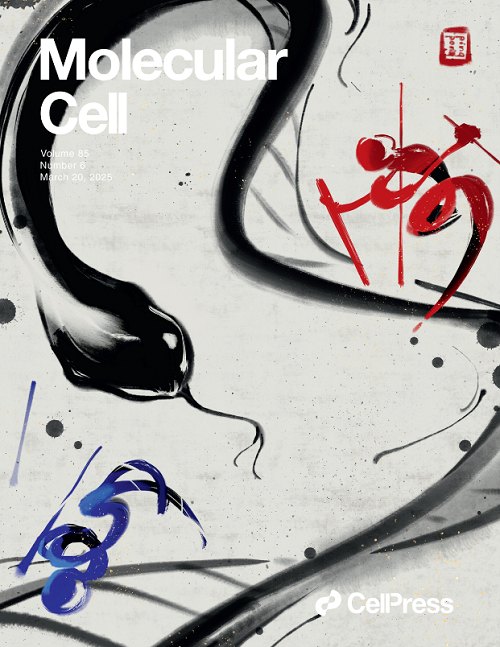
Autonomous shaping of the piRNA sequence repertoire by competition between adjacent ping-pong sites
We showed that the system that silences transposons reshapes itself automatically to match them: competition between adjacent ping-pong sites autonomously tunes piRNA sequence patterns. The paper was featured on the journal cover.
Publications
- 2026
Nature Communications 17(1): 104
- 2025
The Masc-PSI complex directly induces male-type doublesex splicing in silkworms
Communications Biology 8(1): 927
- 2025
Autonomous shaping of the piRNA sequence repertoire by competition between adjacent ping-pong sites
Molecular Cell 85(6): 1134–1146.e4