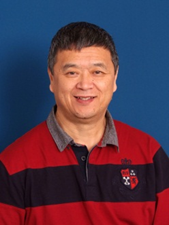
Prof. Quanmin Zhu, Department of Engineering Design and Mathematics, University of the West of England,UK
Title:
Progression report on U-control systems design
Nature of the research
- Blue sky academic research in methodologies, structure, and algorithms.
- Linear approaches can be directly applied to significantly reduce nonlinear control system design procedure.
- Even for linear control system design, U-model provides new insight and concise formulation.
- Potential for wide range of applications in petroleum chemical, metallurgical, biochemical industry process industries, and many other man-made and natural systems.
Open issues for the future research
- Comprehensive theoretical foundation/platform
- Wide range of bench test of applications
Representative publication list:
- Zhu, QM and Guo, LZ (2002). A pole placement controller for nonlinear dynamic plants, Journal of Systems and Control Engineering, Proceedings of the Institution of Mechanical Engineers Part I, 216 (6), 467-476.
- Xu, FX., Zhu, QM, Zhao, DY, and Li, SY. (2013). U-Model based design methods for nonlinear control systems–A survey of the development in the 1st decade, Control and Decision, 28 (7), 961-971.
- Zhu, QM, Zhao, DY and Zhang, JH. (2016). A general U-Block model based design procedure for nonlinear polynomial control systems, Int. J. of Systems Science, 47(14), 3465-3475.
- Zhu, QM, Liu, L, Zhang, WC, and Li, SY. (2018). Control of complex nonlinear dynamic rational systems, ID8953035, Complexity, Hindawi, 2018.
- Geng, XP, Zhu, QM, Liu, T and Na, J (2019). U-model based Smith predictor control for nonlinear processes with input delay, Journal of Process Control, 73, 156–170.
- Zhu, QM, Zhang, WC, Zhang, JH, and Sun, B. (2019). U-neural network-enhanced control of nonlinear dynamic systems, Neurocomputing, 352, 12-21.
- Zhang, WC, Zhu, QM, Mobayen, S, Yan, H, Qiu, J., and Narayan, P. (2020). U-Model and U-control methodology for nonlinear dynamic systems, Complexity, Hindawi.
- Li, RB, Zhu, QM, Kiely, K, and Zhang, WC. (2020). Algorithms for U-model-based dynamic inversion (UM-dynamic inversion) for continuous time control systems, ID3640210, Complexity, Hindawi.
- Li, RB, Zhu, QM, Narayan, P, Yue, A, Yao, YF, and MC Deng, MC. (2021). U-Model-based two-degree-of-freedom internal model control of nonlinear dynamic systems, Entropy, 2021.
- Zhu, QM, Li, RB, and Yan, XG (2021) U-model based double sliding mode control (U_DSM-control) of nonlinear dynamic systems, IJSS.
- Zhu, QM (2021) Complete model‑free sliding mode control (CMFSMC), Scientific Report, Springer Nature.
- Zhu, QM, Mobayen,S, Nemati H., Zhang JH, Wei, W. (2022) A new configuration of composite nonlinear feedback control for nonlinear systems with input saturation, Journal of Vibration and Control (in print).
Brief Biography:
Quanmin Zhu is Professor in control systems at the Department of Engineering Design and Mathematics,
University of the West of England, Bristol, UK. He obtained his MSc in Harbin Institute of Technology,
China in 1983 and PhD in Faculty of Engineering, University of Warwick, UK in 1989. His main research
interest is in the area of nonlinear system modelling, identification, and control. He has published over
250 papers on these topics, edited various books with Springer, Elsevier, and the other publishers, and
provided consultancy to various industries. Currently Professor Zhu is acting as Editor of International
Journal of Modelling, Identification and Control, Editor of International Journal of Computer Applications
in Technology, and Editor of Elsevier book series of Emerging Methodologies and Applications in Modelling,
Identification and Control. He is the founder and president of a series annual International Conference on
Modelling, Identification and Control.
TOP
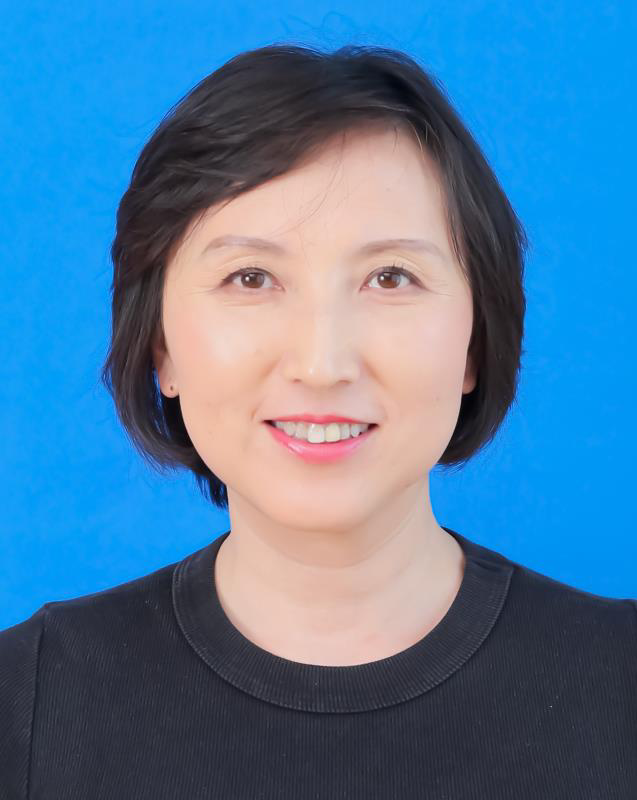
Prof. Ying (Gina) Tang, Professor, Electrical and Computer Engineering, Rowan University, USA
Title:
Towards Adaptive and Personalized Cyber-physical Social Education
Abstract:
A flood of technological innovation is emerging to support the seamless integration and
optimization of cyber space, physical space and social space, fostering a range of mechanisms
and rules with implications for many application domains. Impacts on a new way of education
–metaverse learning - that takes place anytime and anywhere, should be anticipated, enabling
a broader understanding of the mind, cognitive development and learning philosophies.
This talk will present perspectives of Cyber-physical Social Education in the context of
cyber-enabled intelligent learning through immersive virtual reality and gamification.
More specifically, the talk will feature the recent development of modeling and control for
learning augmentation and personalization.
Brief Biography:
Dr. Ying (Gina) Tang is a Full Professor and the Undergraduate Program Chair of Electrical and
Computer Engineering at Rowan University, Glassboro, New Jersey, USA. She received the B.S. and
M.S. degrees from the Northeastern University, P. R. China, in 1996 and 1998, respectively,
and Ph. D degree from New Jersey Institute of Technology in 2001. Her research interests lie in
the area of discrete event systems and visualization, including virtual reality/augmented reality,
modeling and adaptive control for Computer-integrated Systems, intelligent serious games, and green
manufacturing and automation. Her work has resulted in one USA patent, and over 180 peer-reviewed
publications, including 60+ journal articles, 2 edited book, and 6 book / encyclopedia chapters.
She served/serves as Vice President for Finance of IEEE Systems, Man & Cybernetics Society (SMCS)
(2021-2022), Member of Board of Governors of SMCS (2019-2021), and Chair of Electronic
Communication Subcommittee of SMCS (2016-2017). She served/serves Associate Editor of IEEE
Transactions on Computational Social Systems (2018-present), Editorial Board Member of
International Journal of Remanufacturing (2013-present), Guest Editor for the special issue of
Behavioral Modeling, Learning, and Adaptation in Cyber-physical Social Intelligence in IEEE
Transactions on Computational Social Systems, Guest Editor for the special issue of Advances in
Green Manufacturing and Optimization in Processes, and Associate Editor of IEEE Transaction on
Automation Science and Engineering (2009-2012). Dr. Tang is the Founding Chair of Technical
Committee on Intelligent Solutions to Human-aware Sustainability for IEEE SMCS, and the Founding
Chair of Technical Committee on Sustainable Production Automation for IEEE Robotic and Automation
Society (RAS). She is the General Co-Chair of the International Conference on Cyber-physical
Social Intelligence, Beijing, China, Dec. 18-20, 2021; the Program Chair of IEEE International
Conference on Service, Operation, Logistics and Informatics, Zhengzhou, China, Nov. 6-8, 2019; and
the Finance Chair of IEEE International Conference on Systems, Man, and Cybernetics, Maui, Hawaii,
2023. She is the receipt of the meritorious service award from IEEE SMCS (2020), the best paper
award from 2020 IEEE International Conference on Networking, Sensing and Control, the most active
technical committee awards from IEEE SMCS (2021) and IEEE RAS (2020), the best paper finalist from
2017 IEEE International Conference on Automation Science and Engineering, National Academy of
Engineering Frontier of Engineering Education Fellow (2011), Christian R. and Mary F. Lindback
Minority Junior Faculty Award (2007), and Charles A. and Anne Morrow Lindbergh Foundation Award
(2006).
TOP
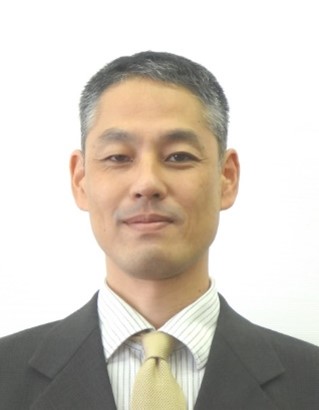
Prof. Takao Sato, Graduate School of Engineering, University of Hyogo, Japan
Title:
Data-driven Multi-rate Control for Redundant Systems
Abstract:
With the development of computer performance and network technology, there are growing expectations
for Society 5.0, where various things will be highly connected. This talk addresses the data-driven
design for controlling redundant systems with multiple communication and control intervals. In such
redundant systems, the model-based approach is difficult to implement because the modelling is complicated.
On the other hand, the data-driven method is easy to implement for systems with multiple intervals, such as
redundant systems, because the optimal design can be done directly from the data.
Brief Biography:
Takao Sato received B.Eng. and M.Eng. degrees from Okayama University in 1997 and 1999, respectively,
and a D.Eng degree from Okayama University in 2002. He is a professor in the Graduate School of
Engineering at University of Hyogo. He is a member of IFAC Technical Committees on Control Education
and Adaptive & Learning Systems and a member of IFAC Working Group on Control Education under the Pandemic
Period. He is also an associate editor for 13th IFAC Symposium on Advances in Control Education 2022, 14th
IFAC International Workshop on Adaptive and Learning in Control Systems, ICIC Express Letters Part B:
Applications, and Frontiers in Control Engineering. He is also the program vice-chair for 64th Japan Joint
Automatic Control Conference, the organizing chair for Symposium on Smart Systems and Control Technology
2022, and an organized session chair for SICE Annual Conference 2022. His research interests are PID control,
mechanical systems, multirate control, multi-agent system, control education and adaptive control. He is a
member of the Society of Instrumentation and Control Engineers in Japan, the Institute of Systems, Control
and Information Engineers in Japan, the Institute of Electrical Engineers of Japan, and the International
Federation of Automatic Control.
TOP
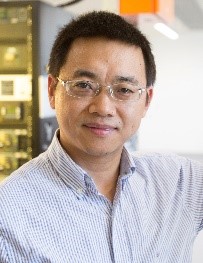
Prof. Daoyi Dong, School of Engineering and Information Technology, University of New South Wales, Australia
Title:
Estimation, Control and Learning in Quantum Technology
Abstract:
Quantum technology is a promising future technology where unique quantum characteristics are taken
advantage of to develop faster computation, securer communication and high-precision sensing than
their classical (non-quantum) counterparts. In this talk, we will introduce several results on state
estimation, parameter identification, robust control and machine learning in quantum technology.
First, an efficient method of linear regression estimation (LRE) is presented for quantum state
tomography. Second, we present a couple of results on quantum Hamiltonian identification and Hamiltonian
identifiability. Then, we will present some results on robust control of quantum systems. Lastly, we give
a brief introduction to quantum machine learning.
Brief Biography:
Daoyi Dong is currently a Scientia Associate Professor at the University of New South Wales, Canberra,
Australia, and he is also an Alexander von Humboldt Fellow. He was with the Chinese Academy of Sciences
and with the Zhejiang University. He had visiting positions at Princeton University, USA, RIKEN, Japan and
the University of Hong Kong, Hong Kong, and University of Duisburg-Essen, Germany. He received a B.E. degree
in automatic control and a Ph.D. degree in engineering from the University of Science and Technology of
China, in 2001 and 2006, respectively. His research interests include quantum control and machine learning.
He was awarded an ACA Temasek Young Educator Award by the Asian Control Association and is a recipient of an
International Collaboration Award, Discovery International Award and an Australian Post-Doctoral Fellowship
from the Australian Research Council, and Humboldt Research Fellowship from Alexander von Humboldt Foundation
in Germany. He serves as an Associate Editor of IEEE Transactions on Neural Networks and Learning Systems,
and a Technical Editor of IEEE/ASME Transactions on Mechatronics. He has also served as General Chair or
Program Chair for several international conferences, and is currently an Associate Vice President and
Member-at-Large of Board of Governors, IEEE Systems, Man and Cybernetics Society. He has published more
than 100 journal papers in leading journals including Nature Human Behaviour, Physical Review Letters,
IEEE Transactions, and Automatica, and more than 60 conference paper. He has attracted a number of competitive
grants with more than AU$2.8 million from Australia, USA, China and Germany.
TOP