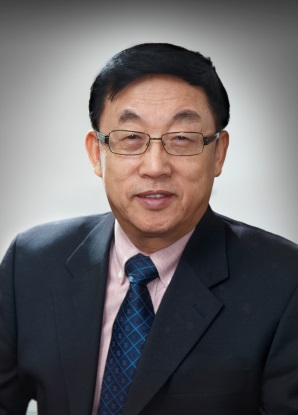
Prof. Tianyou Chai, Member of Chinese Academy of Engineering; Professor, Northeastern University,
China
Title:
CPS Driven Control System
Abstract:
China has abundance of mineral resources such as magnesite, hematite and bauxite, which constitute a key
component of its economy. The relatively low grade, and the widely varying and complex compositions of the
raw extracts, however, pose difficult processing challenges including specialized equipment with excessive
energy demands. The energy intensive furnaces together with widely uncertain features of the extracts form
hybrid complexities of the system, where the existing modeling, optimization and control methods have met
only limited success. Currently, the mineral processing plants generally employ manual control and are known
to impose greater demands on the energy, while yielding unreasonable waste and poor operational efficiency.
The recently developed Cyber-Physical System (CPS) provides a new key for us to address these challenges.
The idea is to make the control system of energy intensive equipment into a CPS, which will lead to a CPS
driven control system. This talk presents the syntheses and implementation of a CPS driven control system
for energy-intensive equipment under the framework of CPS. The proposed CPS driven control system consists
of four main functions: (I) setpoint control; (II) tracking control; (III) self-optimized tuning; and (IV)
remote and mobile monitoring for operating condition. The key in realizing the above functions is the
integrated optimal operational control methods to implement setpoint control, tracking control and
self-optimized tuning together seamlessly. This talk introduces the integrated optimal operational control
methods we proposed. Hardware and software platform of CPS driven control system for energy-intensive
equipment is then briefly introduced, which adopts embedded control system, wireless network and industrial
cloud. It not only realizes the functions of computer control system using DCS (PLS), optimization computer
and computer for abnormal condition identification and self-optimized tuning, but also achieves the
functions of mobile and remote monitoring for industrial process. Then, using fused magnesium furnace as an
example, a hybrid simulation system for CPS driven control system for energy-intensive equipment developed
by our team is introduced. The results of simulation experiments show the effectiveness of the proposed
method that integrates the setpoint control, tracking control, self-optimized tuning and remote and mobile
monitoring for operating condition in the framework of CPS. The industrial application of the proposed CPS
driven control system is also discussed. It has been successfully applied to the largest magnesia production
enterprise in China, resulting in great returns. Finally, future research on the CPS driven control system
is outlined.
Brief Biography:
Tianyou Chai received the Ph.D. degree in control theory and engineering in 1985 from Northeastern
University, Shenyang, China, where he became a Professor in 1988. He is the founder and Director of the
Center of Automation, which became a National Engineering and Technology Research Center and a State Key
Laboratory. He is a member of Chinese Academy of Engineering, IFAC Fellow and IEEE Fellow. He has served as
director of Department of Information Science of National Natural Science Foundation of China from 2010 to
2018.
His current research interests include modeling, control, optimization and
integrated automation of complex industrial processes.
He has published 240 peer reviewed international journal papers. His paper titled Hybrid intelligent control
for optimal operation of shaft furnace roasting
process was selected as one of three best papers for the Control Engineering Practice Paper Prize for
2011-2013. He has developed control technologies with applications to various industrial processes.For his
contributions, he has won 5 prestigious awards of National Natural Science, National Science and
Technology Progress and National Technological Innovation, the 2007 Industry Award for Excellence in
Transitional Control Research from IEEE
Multiple-conference on Systems and Control, and the 2017 Wook Hyun Kwon Education Award from Asian Control
Association.
TOP
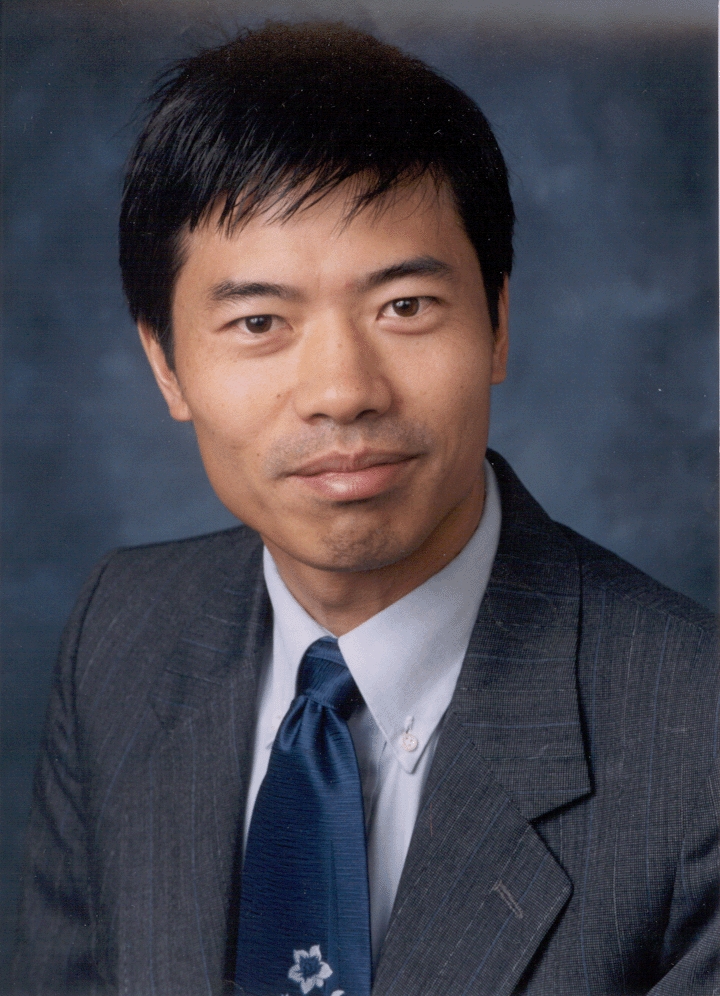
Prof. Mengchu Zhou, Department of Electrical and Computer Engineering, New Jersey Institute of
Technology, USA
Title:
Transforming Semiconductor Manufacturing Industry from Automation to Intelligenization with Industry 4.0
Technologies
Abstract:
Industry 4.0 intends to address a fast-changing and challenging manufacturing environment with diverse
demands, short order lead-time and product life cycle, limited capacities, and highly complex process
technologies. A semiconductor manufacturing system integrated with Industry 4.0 technologies, such as AI,
machine learning, big data analytics, and Internet of Things, is capable of performing real-time monitoring
and optimization of manufacturing processes in various aspects from high level strategic resource and
production planning down to real-time equipment-level smart dispatching and predictive maintenance. By fully
using real-time data and AI, the system is able to help manufacturers shorten production and R&D processes,
increase production capacity, reduce production cost, guarantee product quality, and improve product yield.
It is suitable to help not only high-tech industries such as semiconductor wafer fabrication, but also
conventional labor-intensive sectors. This talk illustrates the transformation of semiconductor
manufacturing activities from automation to intelligenization by using Industry 4.0 technologies through
real-life wafer fabrication applications.
Brief Biography:
MengChu Zhou (Fellow, IEEE) received his B.S. degree in Control Engineering from Nanjing University of
Science and Technology, Nanjing, China in 1983, M.S. degree in Automatic Control from Beijing Institute of
Technology, Beijing, China in 1986, and Ph. D. degree in Computer and Systems Engineering from Rensselaer
Polytechnic Institute, Troy, NY in 1990. He joined New Jersey Institute of Technology (NJIT), Newark, NJ in
1990, and is now Distinguished Professor in Electrical and Computer Engineering. His research interests are
in Petri nets, intelligent automation, Internet of Things, big data, web services, and intelligent
transportation. He has over 900 publications including 12 books, 600+ journal papers (450+ in IEEE
transactions), 26 patents and 29 book-chapters. He is the founding Editor of IEEE Press Book Series on
Systems Science and Engineering, Editor-in-Chief of IEEE/CAA Journal of Automatica Sinica, and Associate
Editor of IEEE Internet of Things Journal, IEEE Transactions on Intelligent Transportation Systems, and IEEE
Transactions on Systems, Man, and Cybernetics: Systems. He is a recipient of Humboldt Research Award for US
Senior Scientists from Alexander von Humboldt Foundation, Franklin V. Taylor Memorial Award and the Norbert
Wiener Award from IEEE Systems, Man and Cybernetics Society, Excellence in Research Prize and Medal from
NJIT, and Edison Patent Award from the Research & Development Council of New Jersey, USA. He is a highly
cited scholar and ranked top one in the field of engineering worldwide in 2012 by Web of Science. He is a
life member of Chinese Association for Science and Technology-USA and served as its President in 1999. He is
a Fellow of International Federation of Automatic Control (IFAC), American Association for the Advancement
of Science (AAAS) and Chinese Association of Automation (CAA).
TOP
Prof. Hong Wang, Oak Ridge National Laboratory, USA

Title:
Collaborative Fault Tolerant Control of Non-Signalized Intersections for Connected and
Autonomous Vehicles
Abstract:
With the potential of increased penetration of connected autonomous vehicles (CAVs), intersectional signal
control faces new challenges in terms of its operation and implementation. One possibility is to fully make
use of the communication capabilities of CAVs so that intersectional signal control can be realized by CAVs
alone – this leads to non-signalized intersectional operation for traffic networks in urban areas. In this
paper, the state-of-the-art on collaborative fault tolerant control schemes for complex systems will be
briefly described. This is then followed by the formulation of operational fault tolerant control that
realizes the collaborative fault tolerance functionality at CAVs operational level in response to possible
individual vehicle faults, where detailed modelling using vehicle movement dynamics will be described
together with the construction of fast fault diagnosis and collaborative fault tolerant control algorithm. A
simple example will be given as well to demonstrate the proposed algorithm together with the discussions on
the other issues such as randomness of the system, communication errors and full energy consideration. These
leads to several future directions of the research for the traffic flow control of non-signalized
intersections with 100% penetration of CAVs.
Brief Biography:
Hong Wang (Senior Member, IEEE) received the master’s and Ph.D. degrees from the Huazhong University of
Science and Technology, Wuhan, China, in 1984 and 1987, respectively. He was a Research Fellow with Salford
University, Salford, U.K., Brunel University, Uxbridge, U.K., and Southampton University, Southampton, U.K.,
before joining the University of Manchester Institute of Science and Technology (UMIST), Manchester, U.K.,
in 1992. He was a Chair Professor in process control of complex industrial systems with the University of
Manchester, U.K., from 2002 to 2016, where he was the Deputy Head of the Paper Science Department, the
Director of the UMIST Control Systems Centre from 2004 to 2007, which is the birthplace of Modern Control
Theory established in 1966. He was a University Senate member and a member of general assembly during his
time in Manchester. From 2016 to 2018, he was with the Pacific Northwest National Laboratory (PNNL),
Richland, WA, USA, as a Laboratory Fellow and Chief Scientist, and was the Co-Leader and the Chief Scientist
for the Control of Complex Systems Initiative. He joined the Oak Ridge National Laboratory in January 2019.
His research focuses on stochastic distribution control, fault diagnosis and tolerant control, and
intelligent controls with applications to transportation system area. He is a fellow of IET. He was an
Associate Editor of the IEEE TRANSACTIONS ON AUTOMATIC CONTROL, the IEEE TRANSACTIONS ON CONTROL SYSTEMS
TECHNOLOGY, and the IEEE TRANSACTIONS ON AUTOMATION SCIENCE AND ENGINEERING. He is also a member for three
IFAC Committees.
TOP